Choosing a table top drill press stand means balancing your specific tool type against the precision you need for your projects. While some stands focus on Dremel-style rotary tools, others are built for standard handheld drills. These options differ mostly in their mounting systems, base stability, and the range of angles they allow.
Best overall: Dremel Rotary Workstation, which offers a versatile range of motion including angled drilling and horizontal mounting, making it highly adaptable for detailed hobbyist tasks and light-duty projects.
Best for rotary tools: Milescraft ToolStand, which uses a reliable rack and pinion system to provide smooth, controlled movement that’s essential for delicate work where hand-held control isn’t enough.
Best for hand drills: Universal Bench Clamp Stand, which features a sturdy clamping head specifically designed to hold standard electric drills firmly in place, ensuring the bit stays straight during operation.
This guide helps you identify which stand fits your existing tools and project requirements.
How We Picked
A product earned a spot only if its listing provided specific technical details, such as collar diameter compatibility, drilling depth capacity, and material composition. We prioritized stands that clearly state their intended use, whether for light-duty hobby work or more robust DIY projects. Products were excluded if the listing lacked basic physical specs or failed to define the range of drills they could safely hold.
All 10 products side by side — scroll sideways to see every column.
| Top Pick | Best for Rotary Tools | Also Great | Best for Hand Drills | Best for Home Repair | Best for Base Stability | Best for Consistent Use | Best for Ergonomics | Best for General Shop | ||
| Preview | 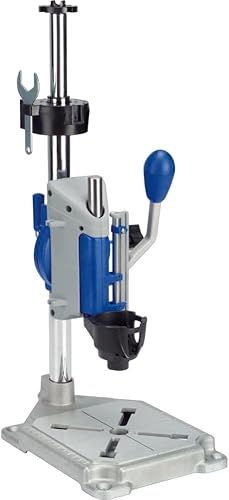 |  |  |  |  |  |  |  |  |  |
|---|---|---|---|---|---|---|---|---|---|---|
| Product | Dremel Rotary Workstation | Milescraft ToolStand | WQV Vertical Drill Stand | Universal Bench Clamp Stand | Universal Hand Drill Stand | Double Hole Drill Stand | Adjustable Height Drill Stand | Electric Drill Press Stand | 360 Degree Drill Stand | Adjustable Drill Press Stand |
| Brand | Dremel | Milescraft | WQV | AOIDFOA | Greensen | YMingweiAn | Irlkavyot | Flylin | Not stated | Greensen |
| Best for | Best Overall | Best for Rotary Tools | Also Great | Best for Hand Drills | Best for Home Repair | Best for Base Stability | Best for Consistent Use | Best for Ergonomics | — | Best for General Shop |
| The listing says | Drills 0 to 90-degree angled holes Holds rotary tool for detailed work | Metal head fits Dremel rotary tools Spring loaded rack and pinion gearing | Fits drills with 1.50” to 1.65” collars Adjustable height and 0-90° angle | Drill depth up to 60mm/ 2.36in Clamping range 38-42mm/ 1.5-1.65in | Wide base with anti-slip ring 60mm drilling depth with adjustment scale | Wide base with anti-slip ring 60mm depth control with scale | 8.8" x 5.9" x 0.9" base Aluminum alloy clamp with reducing bushes | Drill depth up to 60mm (2.4") Fits 38mm – 43mm (1.5" – 1.7") collars | Not stated | Includes column, rocker arm, and wrench Aluminum base with carbon steel components |
| More information | Check Price on Amazon | Check Price on Amazon | Check Price on Amazon | Check Price on Amazon | Check Price on Amazon | Check Price on Amazon | Check Price on Amazon | Check Price on Amazon | Check Price on Amazon | Check Price on Amazon |
1. Dremel Drill Press Rotary Tool Workstation Stand
Best for: Dremel tool owners needing versatile positioning.
This workstation acts as an articulating drill press, allowing you to drill at 15-degree increments up to 90 degrees. This flexibility is useful for projects requiring angled holes that are difficult to achieve by hand. It also serves as a tool holder for horizontal applications like sanding, polishing, or grinding.
The telescopic stand adjusts from 16 to 29 inches, giving you room for various project sizes. It includes cord management clips and depth markings to help you keep your work consistent. Use the depth stop to ensure every hole matches your target, as the unit manages a maximum depth capacity of 2 inches.
If you own a Dremel 4300, 4000, 3000, 200, 100, 8250, 8240, or 8220, this stand fits your tool. Don’t attempt to use standard large-neck power drills here, as the mount is engineered exclusively for Dremel rotary models. For maximum accuracy, secure the unit to your workbench using the four clamping points on the metal base.
Pros
- Articulating head for angled holes.
- Telescopic height adjustment feature.
- Integrated cord management system.
- Depth stop for consistent drilling.
Cons
- Exclusive to Dremel rotary tools.
- Not intended for industrial drilling.
2. Milescraft 1097 ToolStand
Best for: Rotary tool users wanting smooth control.
The Milescraft ToolStand features a metal head designed to fit most Dremel-style rotary tools. Its standout feature is the spring-loaded rack and pinion gearing. This mechanism provides a smooth, controlled downward motion that prevents the bit from jumping when you start a hole.
Use the integrated scale and depth stop to achieve precise, repeatable drilling results. If you’re performing repetitive tasks, set the depth stop once to ensure every hole matches the first. The 13-1/2-inch support column sits on a 6-inch by 6-inch planed steel base. This surface ensures your work remains level during operation.
You can lock your tool in a horizontal position for hands-free tasks, such as polishing or sanding. Note that this stand is sized strictly for rotary-style tools. Don’t attempt to mount heavy-duty electric drills, as the frame isn’t built for that torque.
Pros
- Smooth rack and pinion control.
- Level, planed steel base plate.
- Locks into horizontal position.
- Built-in depth stop for repeatability.
Cons
- Rotary tool not included.
- Limited to smaller rotary tools.
3. WQV Vertical Drill Stand
Best for: Users needing adaptable angle settings.
This stand is designed to hold electric drills with collar diameters between 1.50 and 1.65 inches. It allows for full 0-90 degree angle adjustments, which is helpful if you frequently switch between different drilling orientations. The base is made of aluminum alloy and features slots for attaching a vise.
If your drill collar measures less than 1.50 inches or exceeds 1.65 inches, this model won’t provide a secure fit. Attempting to shim a smaller drill often leads to vibration, which ruins hole accuracy and risks damage to the tool. Always measure your drill collar with calipers before purchase to ensure compatibility.
The clear scale markings assist with alignment, which is important for maintaining precision. For maximum stability, use the crossing slots to bolt the aluminum base directly to your workbench. This prevents the stand from shifting during high-torque applications.
Pros
- Full 90-degree angle adjustment.
- Durable aluminum alloy base.
- Vise-ready mounting slots.
Cons
- Strict collar diameter requirements.
- Requires manual assembly.
4. Universal Bench Clamp Stand
Best for: Standard electric hand drill users.
This stand features a high-strength aluminum clamping head that fits drills with collar diameters from 1.5 to 1.65 inches. If your drill collar falls outside this range, the tool won’t seat properly, leading to dangerous bit wobble or hole misalignment. Always verify your drill’s collar size before mounting to ensure the clamp secures firmly.
It offers a drilling depth of up to 2.36 inches, monitored by a stroke scale on the side for consistent accuracy. You can adjust the working height up to 15.75 inches by moving the safety limit sleeve on the column. This feature allows you to accommodate different workpiece thicknesses without resetting the entire setup.
The base includes socket head cap screws, allowing you to steer the drill base without taking the unit apart. This saves time when you need to shift your drilling position. Weighing 3.53 pounds, the aluminum and iron construction is designed for portability during DIY and repair tasks. Avoid using this stand for heavy-duty industrial projects, as the lightweight frame is optimized for precision work rather than high-torque, continuous production.
Pros
- Stroke scale for depth precision.
- Steerable base for quick positioning.
- Lightweight design for portability.
Cons
- Restricted to 38-42mm drill collars.
- Not intended for heavy-duty industrial use.
5. Universal Hand Drill Stand
Best for: Light-duty home repair projects.
This stand is a straightforward solution for holding a hand drill steady. It fits drill necks from 1.48 to 1.7 inches using an included reducing bushing. The wide base features an anti-slip ring to prevent movement, while four clamping points secure the unit to your workbench.
Measure your drill neck before purchasing. If your drill measures outside the 38mm to 43mm range, the collar won’t secure the tool safely. You should also verify that your project doesn’t require industrial-grade torque. Because this model is built for light-duty household tasks, attempting heavy metalwork or high-pressure drilling will compromise the stability of the aluminum base and lead to inaccurate holes.
It provides a maximum drilling depth of 60mm. Use the adjustable scale ring to lock in your depth until the last millimeter for repetitive tasks. If you’re drilling through materials that require a firm grip, you must provide your own flat-nose pliers, as they aren’t included in the package.
Pros
- Includes anti-slip base ring.
- Precise depth adjustment scale.
- Reducing bushing for compatibility.
Cons
- Light-duty use only.
- Vise not included.
6. Double Hole Drill Stand
Best for: Users needing extra base stability.
The Double Hole Drill Stand uses a wide, heavy-duty base and an integrated anti-slip ring to neutralize vibration. This setup is essential when you must maintain strict accuracy during repeated drilling tasks. It accommodates electric hand drills with neck diameters ranging from 38mm to 43mm (1.48 to 1.7 inches).
If your drill neck falls outside this specific range, the stand won’t secure the tool safely. Use the included reducing bushing if your drill model is on the smaller end of the spectrum to ensure a snug fit.
The push-feed mechanism significantly reduces physical fatigue compared to handheld operation. It also features a precise scale ring that allows you to lock in drilling depths up to 60mm. Set this depth to the millimeter to ensure every hole matches perfectly.
Pros
- Wide base for stability.
- Reduces user fatigue.
- Precise depth control ring.
Cons
- Specific collar size requirement.
- Requires compatible neck diameter.
7. Adjustable Height Drill Stand
Best for: Projects requiring repeated, consistent drilling.
This stand features a solid bar and a larger base (8.8″ x 5.9″) that can be screwed directly to your workbench for maximum stability. By anchoring the 0.9-inch thick base to your surface, you eliminate the shaking or tilting common with handheld operation.
It includes two plastic reducing bushes to help fit different drill sizes securely within the aluminum alloy clamping hole. If your drill fits loosely, use the smaller bush; if it fits snugly, use the larger one. The 12.2-inch handle is designed to be ergonomic, which helps prevent hand soreness during extended use.
The assembly is simple, making it a good choice if you need to get set up quickly. However, the stand is strictly limited by the provided collar diameter. If your drill housing is too wide for the aluminum clamp, don’t attempt to force it, as this compromises the safety of the setup. Always verify your drill diameter against the collar capacity before purchase.
Pros
- Large, screw-down base for stability.
- Ergonomic handle for comfort.
- Simple assembly process.
Cons
- Limited by collar diameter.
- Not for large drills.
8. Electric Drill Press Stand
Best for: Woodworking and metalworking hobbyists.
This stand is designed to minimize vibration and drilling deviations through its metal construction. It fits drills with collar diameters of 1.5 to 1.7 inches. The push rod mechanism offers a stable way to drill straight holes without the drill slipping.
Measure your drill collar before purchasing. If your tool falls outside the 38mm to 43mm range, the mount won’t secure it safely. Don’t attempt to modify the clamp to force a fit, as this compromises the concentricity of the bit.
It provides a drill depth of up to 2.4 inches, which is useful for most small shop tasks. It’s best suited for light-duty hobby projects and isn’t recommended for heavy-duty industrial work. Use this tool for precision tasks like box-cutting or light assembly where accuracy matters more than raw power.
Pros
- Minimizes drilling deviations.
- Stable push rod mechanism.
- Good depth capacity.
Cons
- Not for heavy-duty work.
- Size constraints apply.
9. 360 Degree Drill Stand
Best for: Unique angular drilling needs.
This stand is constructed from an aluminum alloy and is designed to rotate 360 degrees. This makes it a versatile choice if you need to approach your workpiece from unusual angles. The design favors mechanical movement over precision depth control.
Because the manufacturer omits technical specifications for drilling depth or compatible collar diameters, you must verify your tool’s dimensions before purchasing. If your drill has a non-standard collar size, this universal holder may fail to secure it safely. Don’t assume universal compatibility; measure your tool’s neck diameter first.
A common mistake is assuming this stand provides the rigid stability of a dedicated drill press. It’s intended for positioning, not for heavy-duty repetitive production. If you require absolute vertical accuracy for deep holes, look elsewhere. If you need to reach awkward spots on irregular objects, this stand offers the necessary flexibility.
Pros
- Full 360-degree rotation.
- Sturdy aluminum construction.
Cons
- No technical specs provided.
- Verify tool fit manually.
10. Adjustable Drill Press Stand
Best for: General shop and home use.
This stand includes a column, a rocker arm, and adjustable plastic sleeves to fit drill necks of 38mm or 43mm. The base is made of aluminum, while the column and crank are carbon steel, providing a solid structure for home workshops. It includes mounting holes for a vise, which is helpful for keeping small parts secure.
Before assembly, verify your drill’s neck diameter. If your tool falls outside the 38mm to 43mm range, it won’t seat securely in the plastic sleeves, leading to vibration and inaccurate holes. Always utilize the base slots to bolt a vise or clamp to the 150mm by 150mm footprint. Relying on hand-holding workpieces while using this stand is a common mistake that compromises safety and precision.
The maximum drilling depth is 60mm. It’s designed for light-duty use, and the manufacturer notes it isn’t for heavy-duty industrial drilling.
Pros
- Carbon steel column/crank.
- Includes vise mounting holes.
- Fits two common drill sizes.
Cons
- Light-duty use only.
- Vise not included.
How to Choose in Sixty Seconds
Which mount type is best for my drill?
The most important factor is your drill’s collar diameter. Most standard hand drills require a stand that accommodates the typical range of common drill collar diameters. If you own a rotary tool, such as a Dremel, you must choose a stand specifically built for that system, like the Dremel Rotary Workstation or Milescraft ToolStand. Using a stand that doesn’t match your drill’s mounting style can lead to loose fitment, which causes the drill to wobble and prevents accurate holes.
If your drill neck is outside the 38mm to 43mm range, don’t force it into a standard stand. A loose fit creates dangerous vibration and shifts your hole off-center. Always check your drill’s neck size before ordering. Standardizing your setup with the right clamp ensures both safety and precision.
Why does base material matter for my projects?
The base material affects how much the stand vibrates during use. Aluminum alloy bases, like those on the WQV Vertical Drill Stand, are lightweight and portable, making them great for DIY enthusiasts who move their tools around. Steel bases, found on the Milescraft ToolStand, are heavier and often provide a more solid foundation for precise, repetitive drilling.
You can also look for bases with mounting holes to screw the stand directly to your workbench, which is the best way to ensure stability. If you see a stand with an anti-slip ring, it’s designed for light-duty household use. Avoid using these for heavy-duty industrial tasks where vibration might cause the base to creep.
What should I confirm before I buy?
Before ordering, verify the maximum drilling depth and the total height of the stand. Most standard stands offer a depth of about 60mm (2.4 inches), which is enough for most home hobby projects. If you have a deep workbench or large materials, ensure the telescopic height adjustment is sufficient for your needs.
Always check if the stand comes with reducing bushings, as these allow the stand to fit multiple drill sizes. Finally, confirm if the stand allows for a vise attachment; being able to lock your workpiece in place is essential for safety and accuracy when drilling. If the base lacks crossing slots for a vise, you’ll have to hold the material by hand, which increases the risk of the piece spinning if the bit catches.
The Dremel Rotary Workstation and the Milescraft ToolStand are our top choices for rotary tool users, as they offer the best control and adjustment features for detailed work. If you’re using a standard hand drill, the Universal Bench Clamp Stand provides the stability needed for basic home projects. Before you purchase, double-check your drill’s collar diameter and ensure your chosen stand fits that specific size. Once you receive your stand, check the assembly manual to ensure all clamping points are tightened correctly to your workbench for the best results.
Related guides
Frequently Asked Questions
What does a drill press stand need to work effectively?
A drill press stand requires a heavy, stable base and a secure clamping head to function accurately. These components ensure the drill remains steady during operation. Always confirm your drill fits the collar size, as a loose connection can cause vibrations that ruin precision.
What does owning a drill press stand ask of the buyer?
Maintain your drill press stand by keeping the column clean of dust and debris to ensure smooth vertical movement. Regularly check the clamping bolts to keep the stand firmly attached to your workbench. These steps help you safely utilize the depth stop and scale markings.
What usually goes wrong first with these stands?
Common issues include loose clamping heads or loss of tension in the feed mechanism. These problems often result in a sloppy feel when operating the handle. If you notice movement, check the reducing bushings or main collar screw to ensure everything remains tight.
Is the simplest stand on the list enough for my work?
A basic drill press stand provides sufficient stability for drilling straight holes in light materials like wood or plastic. These models offer more control than using your hands alone. However, choose a specialized model with advanced adjustments if you require high precision or specific angles for metalworking.
Conclusion
Once you’ve picked the right model, take a moment to bolt it firmly to your workbench. A stable foundation makes every hole you drill much cleaner and safer. You’ll find that having this extra control really opens up new possibilities for your future woodworking projects. Don’t be afraid to start practicing on scrap wood today.