Choosing a corded hammer drill comes down to how much concrete you need to break versus how much precision you need for standard drilling. While all these models use corded power to maintain steady performance, they differ significantly in weight, vibration control, and motor strength. Picking the right one depends on your specific workload.
Best overall: BOSCH Bulldog Xtreme, because it balances a powerful 8.5-amp motor with built-in vibration control and kickback safety features. Most powerful: ENEACRO SDS-Plus Rotary, chosen for its massive 13-amp motor and high impact energy for heavy-duty demolition. Best for masonry: DEWALT DW511 Hammer, which offers a lightweight, compact frame that keeps users comfortable during extended work sessions.
The rest of this guide is for people who want to match the tool’s capability to their specific project requirements.
How We Picked
We compared 48 different Amazon listings to find the most capable corded hammer drills on the market. To make the list, each product had to clearly state its motor amperage, impact energy ratings, and included accessories. We excluded any models that lacked detailed specifications or clear documentation regarding their primary functions. Our focus stayed strictly on the technical data provided by the sellers to ensure our recommendations reflect the actual capabilities of each tool.
All 10 products side by side — scroll sideways to see every column.
| Top Pick | Best for Demolition | Best for Masonry | Best for Vibration | Best for High Torque | Best for Keyed Chuck | Best for Thick Concrete | Best for Continuous Use | Best for Precision | Best for Light Tasks | |
| Preview |  | 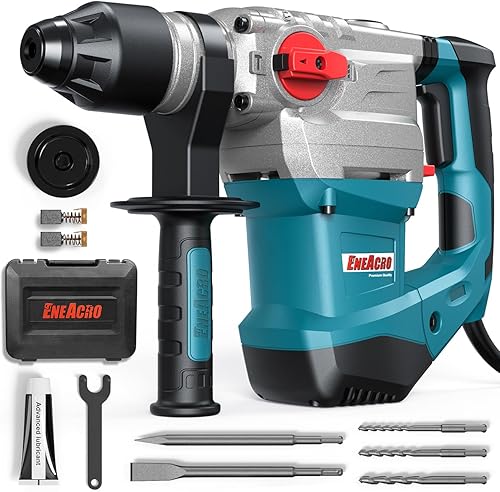 | 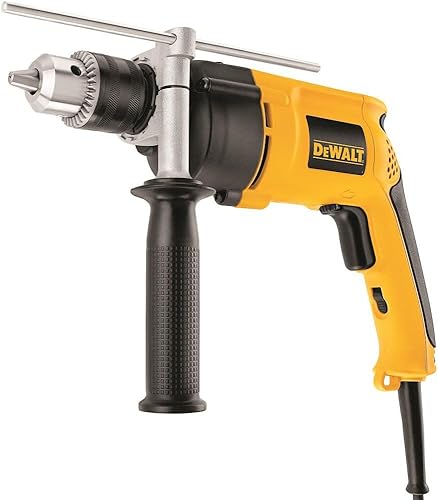 |  |  |  |  |  |  |  |
|---|---|---|---|---|---|---|---|---|---|---|
| Product | BOSCH Bulldog Xtreme | ENEACRO SDS-Plus Rotary | DEWALT DW511 Hammer | Makita HR2641 Rotary | BOSCH HD18-2 Hammer | SKIL 1/2-Inch Hammer | ENEACRO SDS-Max Rotary | CRAFTSMAN 1/2-in Hammer | Bosch 1191VSRK Hammer | BLACK+DECKER Hammer Drill |
| Brand | Bosch | ENEACRO | DEWALT | Makita | Bosch | Skil | ENEACRO | CRAFTSMAN | Bosch | BLACK+DECKER |
| Best for | Best Overall | Best for Demolition | Best for Masonry | Best for Vibration | Best for High Torque | Best for Keyed Chuck | Best for Thick Concrete | Best for Continuous Use | Best for Precision | Best for Light Tasks |
| The listing says | 8.5-amp motor with 2.4 Ft.-Lbs. impact energy KickBack Control stops rotation during bind-up | 13Amp motor with 5.5 feet/lbs impact energy Four functions for drilling and chiseling | 7.8 Amp motor with overload protection Variable speed for precise hole placement | 8 amp motor with 2.1 ft.Lbs. impact energy Internal counterbalance system reduces vibration | 8.5 amp motor for high-torque drilling Auxiliary handle with depth gauge | 7.5 Amp motor for demanding projects 2-in-1 drilling and hammer drilling | 13Amp motor with 9 ft-lbs impact energy Three modes for drilling and demolition | Max 3,100 RPM and 52,700 BPM Keyed chuck for bit retention | Lightweight for small diameter drilling 7 amp motor with high performance-to-weight | 6.5 AMP motor delivers 48,000 bpm 2-position switch for drill or hammer |
| More information | Check Latest Price on Amazon | Check Latest Price on Amazon | Check Latest Price on Amazon | Check Latest Price on Amazon | Check Latest Price on Amazon | Check Latest Price on Amazon | Check Latest Price on Amazon | Check Latest Price on Amazon | Check Latest Price on Amazon | Check Latest Price on Amazon |
1. BOSCH 8.5 Amp GBH2-28L SDS-plus Bulldog Xtreme Max 1-1/8 In.
Best for: Professional contractors and serious home renovators.
The BOSCH Bulldog Xtreme features a robust 8.5-amp motor that delivers 2.4 ft.-lbs. of impact energy. Its standout feature is the KickBack Control, which uses an integrated sensor to stop tool rotation if a bit binds up. This prevents sudden wrist strain during tough drilling. The D-handle design makes it a top choice for overhead or downward drilling tasks where balance is essential.
Vibration control is built into the tool to improve comfort during long chiseling sessions. You can use the Vario-Lock to rotate and lock the chisel into the exact angle you need.
The three-mode selector switch allows you to toggle between drilling, hammer drilling, and chiseling. Use the variable-speed trigger to start bits slowly, which prevents walking on hard surfaces.
Pros
- Effective kickback sensor for safety.
- Comfortable vibration-reducing design.
- Versatile three-mode operation switch.
Cons
- Heavier than standard drills.
- Specialized for masonry work.
2. ENEACRO 1-1/4 Inch SDS-Plus 13 Amp Heavy Duty Rotary Hammer
Best for: Heavy-duty concrete demolition and masonry work.
This ENEACRO SDS-Plus rotary hammer features a 13-amp industrial motor delivering 5.5 feet/lbs of impact energy. It’s built for sustained use, utilizing heat-resistant copper wiring and an anti-dust structure to prevent overheating. If you’re drilling into concrete, the 1.25-inch capacity handles the job, while the 0.5-inch limit applies to metal.
The listing doesn’t mention the switch mechanism or its service life. A safety clutch is integrated to protect your wrists from high torque, while the double-layer anti-vibration system minimizes fatigue during long sessions.
The kit includes three drill bits, two 10-inch chisels, and a carrying case. At 12.58 pounds for the bare tool, it’s designed for stability rather than portability. Because of this weight and the 4200bpm impact frequency, it’s best reserved for masonry, tile removal, or brickwork. If you only need to drive screws or drill into wood, this heavy-duty machine is likely more than you require.
Pros
- High 5.5 feet/lbs impact energy.
- Complete kit with accessories.
- Durable heat-resistant motor.
Cons
- Heavy for overhead use.
- Excessive power for light tasks.
3. DEWALT DW511 Hammer
Best for: Users doing frequent masonry drilling who need to avoid fatigue.
The DEWALT DW511 is a compact, 7.8-amp tool that weighs only 4.3 lbs. Its lightweight frame is specifically designed for extended use, making it easier to handle than the larger rotary hammers on this list. It offers a dual-mode selector that lets you switch between standard drilling and hammer drilling for wood, steel, or masonry.
The 7.8-amp motor includes built-in overload protection. This prevents the tool from burning out during sustained work.
The 360-degree side handle comes with a depth rod, allowing for precise hole placement and consistent depth. Use the rod to lock in your measurement before you begin. This ensures every hole is identical, which is critical for setting anchors.
While it’s excellent for masonry and general drilling, it lacks the raw demolition power of larger SDS models. This makes it a poor choice for breaking up large sections of concrete. Use this tool for fastening and drilling, not for heavy-duty chiseling or demolition.
4. Makita HR2641 1″ AVT Rotary Hammer
Best for: Users sensitive to tool vibration.
The Makita HR2641 Rotary uses Anti-Vibration Technology (AVT), which features an internal counterbalance system to move a weight in the opposite direction of the piston. This significantly cuts down on the shaking felt in your hands. It also uses a damper spring to absorb vibrations directly from the bit.
The 8-amp motor provides 2.1 ft.-lbs. of impact energy, which is enough for most demanding masonry applications. Its recessed hammer function selector is located under the gear housing to help keep it protected from damage. If you frequently work in tight spaces, the retractable tool hook allows you to secure the unit safely between tasks.
The torque-limiting clutch is a critical safety feature. If the bit binds while drilling, the clutch automatically disengages the gears to prevent internal damage. You can choose between rotation only, hammering with rotation, or chipping only depending on your material. This model isn’t the best fit for someone who needs maximum raw power, as its design prioritizes user comfort over sheer force.
Pros
- Excellent vibration reduction technology.
- Torque-limiting clutch protects gears.
- Comfortable rubberized D-handle.
Cons
- Lower impact energy than others.
- More complex to maintain.
5. BOSCH HD18-2 Two-Speed Hammer Drill
Best for: Users who need both high-torque and high-speed settings.
The BOSCH HD18-2 Hammer features a two-speed gearbox, allowing you to choose between high-torque or high-speed drilling. It’s powered by an 8.5-amp motor and features an integral slip clutch that disengages the output shaft if a bit gets stuck. This adds a layer of security for the user during rugged drilling.
The 1/2-inch three-jaw chuck clamps down securely, making it a reliable choice for heavy-duty hammer drilling. Use the high-torque setting for large-diameter bits in masonry, and switch to the high-speed setting for smaller bits in wood or steel. You can easily toggle between rotation-only, hammer-drill, and driver settings using the versatile selector.
It includes an auxiliary handle with a built-in depth gauge to keep your work consistent. This drill isn’t for those who prefer tool-free bit changes, as the keyed chuck requires a tool to swap out bits.
Pros
- Versatile two-speed gearbox.
- Reliable slip clutch safety.
- Strong, secure chuck designed for a wide range of bit sizes.
Cons
- Keyed chuck slows bit changes.
- Lacks SDS-Plus convenience.
6. SKIL 7.5-Amp 1/2-Inch Corded Hammer Drill
Best for: Homeowners needing a compact tool for occasional projects.
The SKIL 1/2-Inch Hammer utilizes a 7.5-amp motor to provide the high torque necessary for demanding home projects. A 2-in-1 function switch allows you to toggle between standard drilling and hammer drilling. Use the standard setting for wood or metal, and switch to hammer mode when you need to penetrate masonry.
The 1/2-inch heavy-duty keyed chuck accepts large diameter bits, making it suitable for tasks that require more bite than a standard drill. If your project involves drilling into concrete, attach the side assist handle to maintain stability and accuracy.
The 2-finger variable speed trigger offers precise control during the initial stages of a hole. Engage the lock-on button for extended drilling tasks to reduce hand fatigue. If you find yourself frequently drilling into reinforced concrete or working on professional job sites, this tool will likely overheat or fail prematurely. For light to medium residential tasks, it remains a reliable choice.
Pros
- Comfortable soft-grip handle.
- Easy to use lock-on button.
- Good control with variable trigger.
- Side handle for stability.
Cons
- Not for industrial workload.
- Basic feature set.
- Keyed chuck requires a tool for bit changes.
7. ENEACRO SDS-Max Heavy-Duty Rotary Hammer Drill
Best for: Heavy-duty demolition and thick concrete work.
The ENEACRO SDS-Max Rotary is a high-performance tool with a 13-amp motor producing 9 ft.-lbs. of impact energy. It’s designed to crush through brick and thick concrete effortlessly. The SDS-Max chuck allows for quick, tool-free bit changes, which keeps your project moving without downtime.
The safety clutch is a vital addition, preventing kickback and reducing strain on your wrists when the tool hits tough materials. It also features a dual-layer anti-vibration system to minimize fatigue during long hours of work. Because this tool weighs 15.2 lbs, it isn’t suitable for users who need a light or portable drill for small home repairs.
Choose the hammer-only mode for demolition and chiseling tasks. Switch to the hammer drill setting when you need to penetrate concrete, rock, or other hard materials. If you’re working in tight spaces or at awkward angles, rotate the 360-degree handle to maintain control.
Avoid using this for light-duty tasks where precision matters more than brute force. The 1.57-inch maximum drilling diameter is intended for heavy masonry, not delicate work. Using this tool for small holes often leads to unnecessary fatigue due to the machine’s substantial weight.
Pros
- Massive impact energy for demolition.
- Tool-free bit changing system.
- Strong anti-vibration performance.
Cons
- Very heavy for most users.
- High power may be excessive.
8. CRAFTSMAN 1/2-in Hammer Drill (7 Amp) (CMED741)
Best for: Beginners or those who want a simple setup.
The CRAFTSMAN 1/2-in Hammer Drill delivers 3,100 RPM and 52,700 BPM, providing the force needed for concrete and masonry. Its keyed chuck ensures bits stay locked, preventing slippage during high-impact work. Use the lock-on trigger to maintain consistent speed during long projects without tiring your hand.
If you’re drilling into standard brick or light masonry, this tool offers the steady power required. However, if you encounter reinforced concrete or dense stone, be prepared for potential bit binding. Because this model lacks an electronic kickback clutch, you must keep a firm grip on the side handle at all times. If the bit catches, the tool will twist suddenly.
When the drill binds, release the trigger immediately to prevent wrist strain. This tool is ideal for straightforward tasks where you can control the pressure manually. It isn’t the right choice for heavy-duty, professional-grade demolition where automatic safety sensors are necessary to prevent injury.
Pros
- Simple and easy to use.
- Reliable keyed chuck system.
- Lock-on trigger for comfort.
Cons
- Lacks advanced safety clutches.
- Standard feature set only.
9. Bosch 1191VSRK 120-Volt 1/2-Inch Single-Speed Hammer Drill
Best for: Precision drilling in small, tight areas.
The Bosch 1191VSRK Hammer is built for precision, offering a high performance-to-weight ratio with its 7-amp motor. It’s lightweight and compact, making it ideal for drilling small-diameter holes where control is more important than raw force. The 360-degree auxiliary handle and depth gauge allow you to work accurately in awkward positions.
Use the rotation-only mode for standard drilling into wood or metal. Switch to the hammer-drill mode only when you encounter masonry.
This drill isn’t intended for heavy-duty demolition or breaking up thick masonry, as its compact impact mechanism is optimized for smaller tasks. If your job involves large-scale concrete work, you’ll likely find this model underpowered. Avoid using it for jobs requiring sustained, high-torque output, as the motor is tuned for portability rather than raw endurance.
Pros
- Very lightweight and compact.
- Excellent control for precision work.
- Includes depth gauge for accuracy.
Cons
- Not for heavy demolition.
- Limited impact force.
10. BLACK+DECKER Hammer Drill
Best for: Light home maintenance and DIY projects.
The BLACK+DECKER Hammer Drill uses a 6.5-amp motor that delivers 48,000 BPM. It’s a corded model, which means you never have to worry about battery life running out mid-job. The 2-position switch allows you to toggle between standard drilling for wood and hammer drilling for masonry.
Use the standard drill setting for wood or metal to avoid damaging your bits. When you switch to the hammer setting, you gain the force needed to penetrate concrete, stone, and brick. If you feel the tool vibrating excessively, adjust the adjustable side handle to stabilize your grip and reduce muscle fatigue.
The single-sleeve chuck makes it easy to swap out bits without extra tools. This robust chuck accommodates the heavy-duty bits required for masonry work. While this drill is perfect for home tasks, it isn’t designed to withstand the daily rigors of a professional construction site. Overworking the motor on continuous, heavy-duty projects will shorten its lifespan.
Pros
- Unlimited runtime with corded power.
- Easy single-sleeve chuck system.
- Comfortable side handle positions.
Cons
- Lower power for heavy tasks.
- Basic durability for light use.
How to Choose in Sixty Seconds
Which difference between hammer drills actually matters?
The most important difference is the chuck type and the impact mechanism. SDS-Plus and SDS-Max systems are built for heavy-duty masonry, using a specialized sliding chuck that lets the bit move independently for better impact energy. In contrast, standard keyed or keyless chucks found on models like the DEWALT DW511 or CRAFTSMAN Hammer are meant for general drilling with occasional masonry work. If you’re drilling through thick, poured concrete, you need an SDS model. If you’re just putting anchors into brick or cinder block, a standard hammer drill is usually enough. Always confirm the Occupational Safety and Health Administration guidelines for tool safety when performing heavy drilling tasks in construction environments.
What should I skip when shopping?
Skip models that offer “all-in-one” features if your work is specialized. For instance, if you’re doing professional demolition, don’t choose a lightweight, high-speed drill just because it has a low weight. You’ll end up burning out the motor. Conversely, don’t buy a 15-pound heavy-duty rotary hammer if you only need to hang pictures or mount shelves in drywall. The extra weight and power will make the tool harder to control, increasing the risk of damaging your wall. Focus on the amperage and the intended material—wood, metal, or concrete—listed on the box.
What should I confirm before ordering?
Confirm the bit shank compatibility. SDS-Plus bits don’t fit into standard three-jaw chucks, and standard bits won’t fit into an SDS-Max rotary hammer. You must check the chuck type listed for the drill to ensure your existing bits will work or budget for new ones. Also, verify if the tool includes a depth gauge and a side handle, as these are critical for safety and accuracy when drilling into masonry. Without a side handle, controlling the torque of a hammer drill is difficult and potentially dangerous. Check the warranty information provided by the seller to see how long they cover defects.
For professional-grade work, the BOSCH Bulldog Xtreme remains the top choice for its balance of power and safety, while the ENEACRO SDS-Plus Rotary is the go-to for those needing raw, heavy-duty demolition capability. If you’re a homeowner, look toward the DEWALT DW511 Hammer for its reliability and ease of use in light masonry tasks. Take a moment to check your current bit collection before finalizing your purchase to make sure it matches the chuck type of your chosen model. Getting the right tool for your specific concrete or masonry job will save you time and prevent unnecessary tool wear.
Frequently Asked Questions
What does a hammer drill need to work properly?
A hammer drill requires a standard 120-volt outlet and specific bits for your target material. You must use carbide-tipped masonry bits for concrete, as standard bits will fail immediately. Ensure you use SDS-Plus shank bits if your tool features an SDS-style chuck.
What does owning a corded hammer drill ask of the buyer?
You must manage power cords safely and clean the air vents regularly to prevent dust buildup. Carbon brushes require monitoring for wear and should be replaced once they become too short to make contact. Keep the bit shank lubricated to reduce friction during heavy-duty drilling.
What goes wrong first on these tools?
The most common points of failure on a corded hammer drill are the chuck and the motor brushes. Motor brushes naturally wear down over time as they conduct electricity to the motor. If the drill loses power or sparks excessively, you should inspect or replace these internal components.
Is the simplest one on the list enough for my needs?
Simple hammer drills are ideal for occasional home projects like mounting shelves or drilling into brick. These tools provide sufficient power for standard masonry tasks with the benefit of unlimited runtime. However, they lack the impact energy required for structural concrete or heavy demolition work.
Conclusion
Once you’ve decided which tool fits your project, head to your local hardware store to hold a few models in person. You’ll quickly see which handle feels most comfortable in your grip. Don’t forget to grab a set of high-quality masonry bits, as they’ll make your upcoming work go much smoother.