Finding the best drill press depends on your shop space, project scale, and speed-change frequency. Whether you prioritize portability, power, or digital guidance, machines vary by swing capacity, motor control, and precision features. The JET 12-Inch Benchtop suits standard furniture work, while the Powermatic 18-Inch Floor offers heavy-duty capacity for larger stock.
All 10 products side by side — scroll sideways to see every column.
| Top Pick | Best for Laser Alignment | Best for Speed Readout | Best for LED Guides | Best for High Capacity | Best for Safety Keys | Best for Tilting Tables | Best for Floor Use | Best for Touchscreen | Best for DIY Projects | |
| Preview |  |  |  |  |  |  |  |  | 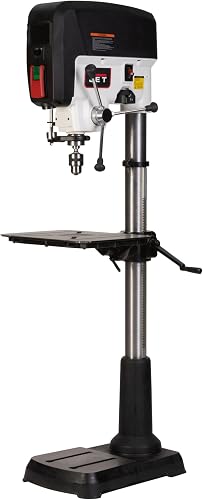 |  |
|---|---|---|---|---|---|---|---|---|---|---|
| Product | JET 12-Inch Benchtop | SKIL 10-Inch Benchtop | WEN 10-Inch Variable | Rikon 12-Inch Variable | Powermatic 18-Inch Floor | BUCKTOOL 10-Inch Benchtop | JET 10-Inch Benchtop | Garvee 13-Inch Floor | JET 20-Inch Smart | VEVOR 12-Inch Benchtop |
| Brand | Jet | Skil | WEN | RIKON Power Tools | Powermatic | Bucktool | Jet | Garvee | Jet | VEVOR |
| Best for | Best Overall | Best for Laser Alignment | Best for Speed Readout | Best for LED Guides | Best for High Capacity | Best for Safety Keys | Best for Tilting Tables | Best for Floor Use | Best for Touchscreen | Best for DIY Projects |
| The listing says | Spindle speed 530 to 3,100 RPM Cast iron base and tilting table | 6.2 Amp induction motor 5 speeds from 610 to 2800 RPM | 6.2-amp motor, 10-inch swing Variable speed 530 to 3100 RPM | 3/4 HP motor Variable speeds | Variable speeds 250 to 3,000 RPM Laser guides for tool point | 3/4HP 6.2-Amp motor, 10-inch swing 5 speeds 650 to 3100 RPM | 10 inch swing 630 to 3300 RPM speed range | 7.5A induction motor 5/8 in chuck and drill capacity | 5" touchscreen speed recommendations 20" swing, 6" quill travel | 12 in swing, 5A induction motor Class IIIA 2.5mW laser |
| More information | Price on Amazon | Price on Amazon | Price on Amazon | Price on Amazon | Price on Amazon | Price on Amazon | Price on Amazon | Price on Amazon | Price on Amazon | Price on Amazon |
1. JET 12″ Benchtop Drill Press
Best for: A dedicated woodworker who needs consistent speed changes and precision.
This machine is built for the busy woodworking bench where efficiency matters. The variable speed lever lets you adjust from 530 to 3,100 RPM while the motor runs, saving you from manual belt adjustments. Its 12-inch swing and 3-1/8 inch spindle travel are sized for common cabinet and furniture tasks.
The cast iron build provides a sturdy foundation, while the XACTA laser system projects a clear crosshair on your drill point. The digital RPM display ensures you match your bit speed to the material exactly. This model isn’t for someone looking for a lightweight, mobile unit, as its 85-pound weight and bench-mounting requirement mean it stays where you put it.
Good if:
- You frequently switch between different drill bits.
- You need a clear view of your drill point.
- You want a machine backed by a 5-year warranty.
Skip it if:
- You have very limited shop space for a benchtop unit.
- You prefer a simple, non-electronic belt-driven speed system.
2. SKIL 6.2 Amp 10 In. 5-Speed Benchtop Drill Press
Best for: Someone who wants a straightforward, reliable tool for basic drilling.
The SKIL 10-Inch Benchtop uses a 6.2 amp induction motor to handle wood and metal. It offers five specific speeds ranging from 610 to 2,800 RPM, which you select by adjusting the belt under the top cover. This mechanical approach is reliable and avoids the complexity of digital speed controls.
The laser alignment and LED work light help keep your drilling accurate. The adjustable table height and depth stop provide the control needed for consistent results across multiple pieces. If you’re drilling softwoods, use the higher end of the RPM range for a cleaner finish. For harder metals, stick to the lower 610 RPM setting to prevent bit overheating.
This model isn’t for those who need to change speeds constantly, as the belt-change process is manual. If your project requires frequent adjustments between materials, the time spent opening the housing and shifting the belt will slow your production.
Good if:
- You prefer a mechanical speed system over digital controls.
- You need a compact footprint for a smaller shop.
- You want reliable, no-frills performance.
Skip it if:
- You find manual belt changes tedious for your workflow.
- You need a larger swing capacity for wide boards.
- You require rapid, push-button speed shifts.
3. WEN 10-Inch Benchtop Drill Press
Best for: A hobbyist who wants variable speed control on a budget.
This WEN model features a 6.2 amp motor and a variable speed range of 530 to 3,100 RPM. The digital readout displays the exact RPM, allowing for quick adjustments suited to your project. Its 10-inch swing and 2-inch spindle travel are standard for light-duty benchtop work.
The cast iron construction helps maintain stability despite its lighter weight of 57 pounds. It includes a laser guide and an adjustable depth stop to assist with repetitive drilling. This machine isn’t for those handling large or very thick stock where a deeper quill travel would be beneficial.
Good if:
- You want a digital speed readout at a lower weight.
- You perform varied light-duty projects frequently.
- You need a machine that’s easier to move around.
Skip it if:
- You plan to drill very deep holes regularly.
- You require the heavy-duty stability of a floor-standing model.
4. Rikon 12 inch Variable Speed Drill Press
Best for: Woodworkers who need extra power for tougher tasks.
The Rikon 12-Inch Variable stands out with its 3/4 HP motor, providing more torque than many smaller benchtop units. It offers variable speeds and comes equipped with a digital display for precision. The inclusion of both an LED light and laser guides helps with visibility and accuracy.
Use this machine when your projects involve hardwoods or larger diameter bits that would stall a standard motor. If you find yourself frequently switching between materials, the digital speed display ensures you maintain the correct RPM for every bit size.
This drill press is built to handle the demands of a more serious hobbyist shop. It isn’t for the user who only needs a basic tool for occasional, small-scale hole drilling, as the motor and build are designed for more frequent use. Avoid this model if your work is limited to very soft materials or if you lack the space for a heavier unit.
Good if:
- You need extra power for hardwoods or larger bits.
- You value having both laser and LED lighting.
- You need precise speed control for different materials.
Skip it if:
- You’re looking for a simple, entry-level tool.
- Your projects are limited to very small, soft materials.
5. Powermatic PM2800B 18″ Floor Drill Press
Best for: The professional or high-end shop requiring maximum capacity.
This floor-standing drill press eliminates belt changes entirely with an infinitely variable speed system. You can adjust the rotation anywhere from 250 to 3,000 RPM instantly. This range allows you to match the speed precisely to your material density.
The 18-inch swing and 6-inch quill travel allow for deep, accurate drilling in large workpieces. The cast iron work table tilts up to 90 degrees for angled boring.
The oversized cast iron base provides exceptional stability for heavy workloads. To avoid vibration, ensure the base is bolted securely to a level floor. Reversible handles allow you to mount them on either side of the machine, which helps if your shop layout forces the press into a corner. Two independently-adjustable LED lights eliminate shadows, while the laser guides provide an accurate indication for the tool point.
Good if:
- You work with large, heavy timber.
- You hate changing belts and want instant speed control.
- You require a professional-grade setup for accuracy.
Skip it if:
- You lack the floor space for a large machine.
- You work exclusively on small, portable projects.
6. BUCKTOOL 10-Inch Drill Press 6.2 Amp 3/4 HP Bench Drill
Best for: Someone who wants a robust, vibration-resistant benchtop drill.
The BUCKTOOL 10-Inch Benchtop utilizes a 3/4 HP, 6.2 amp motor to provide power for light-duty tasks. It offers five speeds from 650 to 3,100 RPM, adjusted via the belt system. The focus here is on stability, with a heavy cast iron base designed to minimize vibrations during use.
You change speeds by shifting the belt position on the pulleys under the top cover. If you’re drilling metal, use the lower end of the 650 to 3,100 RPM range to prevent overheating your bits. For wood or plastic, the higher speeds provide a cleaner cut.
The unit includes a tilting worktable and a fence system to support your stock. The head assembly is designed for quick adjustments, making it versatile for various drilling angles. If you struggle with alignment, use the built-in LED light to illuminate your mark before engaging the spindle.
This isn’t for those who want a digital interface, as it relies on traditional manual speed settings. Always remove the switch key when the machine is idle to prevent unintentional starts.
Good if:
- You prioritize a stable, low-vibration build.
- You need a fence system to support edge drilling.
- You want a reliable motor for light-duty work.
Skip it if:
- You want digital speed controls.
- You need a machine with a large floor footprint.
7. JWDP-10 JET 10″ DRILL PRESS (JT1-3162)
Best for: A user who needs a lightweight, portable drill press.
At only 48 pounds, the JET 10-Inch Benchtop is the most portable option in this lineup. It offers a 10-inch swing and five speeds between 630 and 3,300 RPM. The table tilts 45 degrees, providing flexibility for angled drilling tasks in a compact package.
This model is ideal for smaller shops where you might need to move the tool between different benches. Because it runs on standard 120V household power, you can plug it into any wall outlet without needing specialized electrical upgrades.
It isn’t for heavy-duty production work. If you’re drilling through thick, dense hardwoods all day, the lightweight frame may struggle to maintain the rigidity required for precision. Choose this model when your priority is shop flexibility rather than high-volume industrial output.
Good if:
- You have very limited shop space.
- You need to move your drill press often.
- You want a simple, trusted brand design.
Skip it if:
- You need maximum power for drilling thick hardwoods.
- You require digital speed readouts or laser guides.
8. Garvee 13 in Floor Drill Press
Best for: A home shop looking for large capacity at a lower footprint.
The Garvee 13-Inch floor drill press features a 7.5 amp motor and a wide variable speed range of 288 to 3,084 RPM. The 13-inch swing and 5/8-inch chuck capacity make it suitable for a variety of metal and wood tasks. Its heat dissipation system is designed to keep the motor cool during longer sessions.
If you’re working with soft wood, keep the speed toward the higher end of the range.
The unit offers high locking strength for precise hole placement. It isn’t for someone who needs the massive capacity of an 18-inch machine, though it offers more room than any benchtop unit. A common mistake is failing to utilize the 0-45° tilting worktable for angled holes, which forces users to shim their workpieces manually.
Good if:
- You need more room than a benchtop model allows.
- You want a wide range of variable speeds.
- You need to drill both wood and metal.
Skip it if:
- You need the stability of a larger, heavier floor press.
- You prefer a machine with a digital touchscreen interface.
9. JET 20″ Smart Floor Drill Press
Best for: The tech-forward woodworker who wants precise, guided drilling.
The JET 20-Inch Smart features a 5-inch touchscreen that recommends speeds based on your material and bit size. Select from 7 materials and 22 tool types, then enter the bit diameter to see the target RPM in green. You can save 15 custom setups as presets. A motor-load meter monitors your progress, signaling when to ease off the feed.
The 6-inch quill travel per revolution makes it fast for repetitive work. Use the digital depth stop to set four distinct behaviors, including automatic stops or reversals, while a mechanical hard stop provides a final safety backup. Crosshair lasers center your bits, and the 20-1/4″ x 13-15/16″ cast iron table tilts 90° or rotates 360° to accommodate complex geometry.
If you work with hardwood, softwood, acrylic, aluminum, brass, glass, or mild steel, this machine excels. However, don’t use it for hardened, tool, or stainless steel. The unit weighs 218 pounds and stands 71.5 inches tall; you must bolt it directly to the floor, as it lacks a mobile base.
Good if:
- You want digital assistance to prevent bit burn or breakage.
- You need to save specific setups for recurring production runs.
- You require high-precision depth control with audible alerts.
Skip it if:
- You prefer a simple, mechanical interface.
- You lack the floor space for a 20-inch swing model.
10. VEVOR 12 Inch Benchtop Drill Press 5 Amp 120V Variable
Best for: A DIYer who wants variable speed.
The VEVOR 12-Inch Benchtop offers a 5 amp motor and variable speed control from 580 to 3,200 RPM. It includes an LED digital screen for speed monitoring and a laser guide for accurate placement. The cast iron base ensures stability during operation.
If you’re drilling through metal or wood, use the variable speed dial to match your material density. Higher speeds near 3,200 RPM work best for small bits in soft wood, while lower speeds near 580 RPM prevent bit burning when drilling into metal. Always check the digital display before starting to ensure you’re within the safe range for your specific bit size.
This machine is designed for general home DIY needs. It isn’t for professional cabinet shops that require the heavy-duty construction and long-term durability of premium industrial-grade drill presses. While the unit includes a heat dissipation system, it’s built for intermittent home use rather than continuous, high-frequency industrial production.
Good if:
- You want variable speed control on a budget.
- You need digital speed monitoring.
- You’re a home DIYer with varied light projects.
Skip it if:
- You need a machine for high-frequency, professional production.
- You prefer a brand with a long history in industrial tools.
Where These Overlap
Most of these drill presses share core features like cast iron bases, tilting tables, and basic safety keys, meaning the primary differences lie in the motor control and size. For instance, the various benchtop models from JET, WEN, and VEVOR all offer variable speed control with digital readouts. While they’re very similar in function, the specific build quality and brand reputation often dictate the choice for the buyer.
The SKIL, BUCKTOOL, and JET benchtop models represent the mechanical-speed group. They’re reliable and less prone to electronics issues, but they require the user to open the top cover to change belts. If you rarely change speeds, these are effectively identical in their utility.
The floor-standing models like the Powermatic 18-Inch Floor and Garvee 13-Inch Floor offer significantly more clearance and power. They’re in a different class than the benchtop units and are meant for users with dedicated floor space. Choosing between them comes down to whether you want the advanced, guided features of the JET 20-Inch Smart or the solid, high-capacity performance of the Powermatic.
Still Not Sure?
How often will I really use this machine?
If you only drill a few holes a month for small crafts, a compact, simple machine like the entry-level JET benchtop will serve you well without taking up much space. However, if you’re building furniture every weekend, you’ll quickly find that changing belts manually becomes a chore. In that case, look for a variable speed model that allows you to change RPMs with a lever or dial, such as the JET 12-Inch Benchtop, which will save you time and frustration during long projects.
What do I already own that this must work with?
Check your current workbench space and the size of the projects you usually tackle. If you only have a small corner for tools, a large floor-standing press will be impossible to fit. If you already own high-quality bits and need precision for fine woodworking, you want a machine with a stable quill and minimal runout. For those with a small shop, the WEN variable-speed benchtop model offers a nice balance of features without the massive footprint of a floor model, ensuring your workspace remains functional for other tasks.
What am I most likely to regret choosing?
Many buyers regret choosing a machine that’s too small for their future projects. If you start with a compact entry-level swing and later decide to build larger cabinets, you’ll be limited by the drill press’s capacity. Additionally, if you hate tinkering with belts, avoid the mechanical-speed models even if they seem like a better deal. For a machine that grows with your skills and provides professional-level control, the Powermatic 18-Inch Floor is a choice that’s unlikely to result in “feature regret” as your woodworking hobby expands.
Frequently Asked Questions
Do I need a floor-standing or benchtop drill press for woodworking?
A benchtop model is usually sufficient for hobbyists working on smaller furniture, boxes, or crafts. They’re compact and fit well in garages. A floor-standing press is necessary if you regularly drill into large, heavy boards or require deep quill travel for thick timber. The Powermatic 18-Inch Floor is built for large projects, whereas smaller benchtop models like the JET are better for space-constrained shops.
What does “swing” mean on a drill press?
Swing is the distance from the center of the chuck to the edge of the column, doubled, indicating the widest board you can drill to the center. A 10-inch drill press handles a 10-inch wide board. For larger panels, models like the JET 20-Inch Smart provide significantly more clearance than standard benchtop units.
Is a variable speed drill press better than a fixed-speed one?
Variable speed is highly recommended for woodworking because different bits and materials require different speeds to prevent burning the wood. A variable speed machine like the Rikon 12-Inch Variable allows you to adjust the RPM instantly. Fixed-speed or manual belt-change machines, such as the BUCKTOOL benchtop model, are reliable but require you to stop the machine and move belts to change speeds, which can be tedious if you change bit sizes often.
What safety features should I look for?
Choose a drill press with a removable safety key to prevent unauthorized use. Advanced machines like the JET 20-Inch Smart include digital depth stops and motor-load meters to prevent overworking the tool. Always bolt your machine to the bench or floor to prevent tipping, especially with floor-standing models like the Garvee 13-Inch.
Closing
Selecting the best drill press for woodworking comes down to your shop’s space and your willingness to manage belt changes. For the hobbyist who wants a high-quality, variable-speed benchtop machine, the JET 12-Inch Benchtop is an excellent choice. If you have the floor space and require professional-grade power, the Powermatic 18-Inch Floor is the superior option for large-scale projects.
Before you purchase, double-check your workshop dimensions to ensure you have room for a mid-sized benchtop unit. A machine like the JET 12-Inch requires a dedicated 15A circuit to handle its 1/2 HP motor. If you’re choosing between a belt-drive system and a variable-speed model, remember that belt-drive units require manual adjustment for speed changes, while variable-speed models allow you to adjust RPMs while the motor runs.