Finding the best soccer dribbling drills depends on your goals, available space, and skill level. Some players prioritize repetitive footwork to build muscle memory, while others prefer interactive games. The main difference is whether the equipment is static, like a mat, or active, like agility poles or a dummy defender.
All 10 products side by side — scroll sideways to see every column.
| Top Pick | Best for Guided Practice | Best for Ball Control | Best for Gamification | Best for Game Simulation | Best for Agility Drills | Best for Daily Drills | Best for Interactive Play | Best for Solo Practice | Best for Speed Training | |
| Preview | 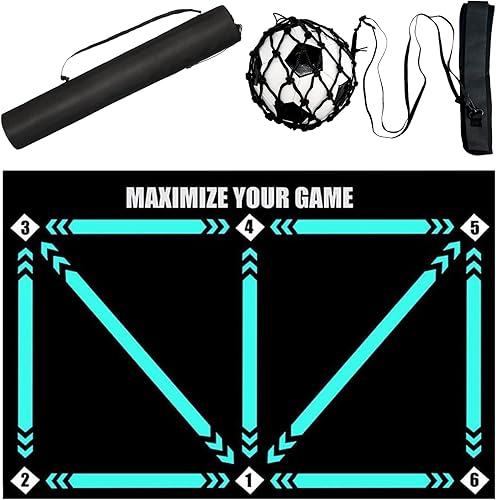 |  |  | 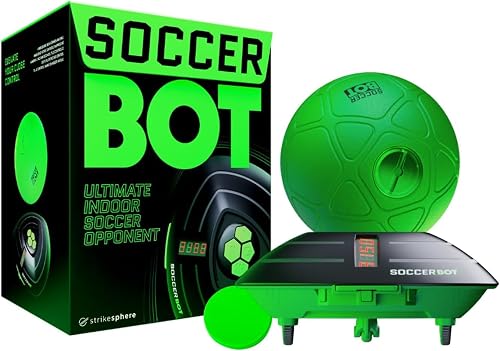 |  |  |  |  |  | 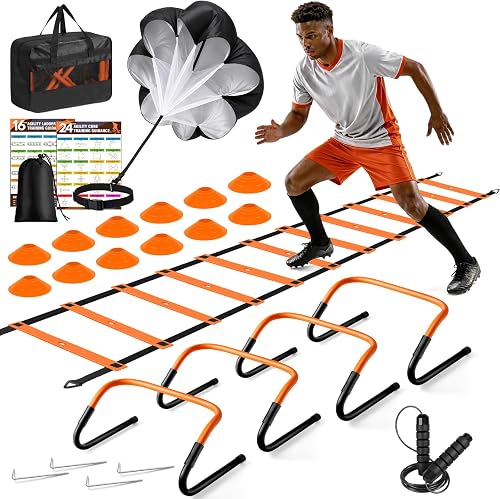 |
|---|---|---|---|---|---|---|---|---|---|---|
| Product | Non-Slip Soccer Training Mat | ZVD Soccer Training Mat | RYACO Soccer Training Mat | Soccer Bot | GoSports XTRAMAN Dummy | GHB Agility Poles | Soccer Training Mat | Soccer Trainer Set | Football Kick Trainer | Agility Ladder |
| Brand | ECENUR | ZVD | Ryaco | Strikesphere | GoSports | GHB | Champhox | E E-JET GAMES | TOBWOLF | SMTPDT |
| Best for | Best Overall | Best for Guided Practice | Best for Ball Control | Best for Gamification | Best for Game Simulation | Best for Agility Drills | Best for Daily Drills | Best for Interactive Play | Best for Solo Practice | Best for Speed Training |
| The listing says | Improves ball control and agility Includes mat, storage bag, return net | Includes manual with QR code drills Markers for L-shape and transition drills | 35" x 24" mat with storage bag High-density diatomite material | Uses sensor technology for indoor training Three customizable speed settings | Developed with professional coaches Lifelike size for passing and dribbling | 3.9ft flexible rugged ABS poles Widened screw-free rubber bases | 3.8mm thickened wear-resistant fabric Includes paper training guide | Interactive challenges with flashing lights Includes foam soccer ball | Fits Size 3, 4, and 5 footballs Adjustable waist belt for all sizes | Includes ladder, hurdles, parachute, and cones Develops acceleration, footwork, and strength |
| More information | Price on Amazon | Price on Amazon | Price on Amazon | Price on Amazon | Price on Amazon | Price on Amazon | Price on Amazon | Price on Amazon | Price on Amazon | Price on Amazon |
1. ECENUR Non-Slip Soccer Training Mat
Best for: Someone wanting a simple, dedicated space for daily footwork practice.
This mat provides a clear visual guide for your feet, which helps in mastering complex movements without needing extra instructions. By training on the lines and dots, you can focus on your ball control and agility in a small area, like a living room or a bedroom. Dedicate 30 minutes each day to these patterns to build an intuitive connection with the ball.
The diatom earth material is designed to be wear-resistant and easy to clean, which is helpful if you use it frequently. It also features a rubber underside to keep it from sliding during intense sessions while keeping your movements silent.
This mat isn’t for someone who needs electronic feedback or sensor-based tracking to stay motivated during their drills. If you require real-time data on your foot speed, you’ll be disappointed by the lack of digital components.
Good if:
- You have limited space at home.
- You prefer following printed patterns for drills.
- You need something quiet for indoor use.
Skip it if:
- You want digital progress tracking.
- You prefer training against a physical opponent.
2. ZVD Soccer Training Mat with Video Tutorials
Best for: A player who wants professional guidance through video tutorials.
This mat takes the guesswork out of your practice by including a QR code that leads to a library of video drills. These visuals help you progress from basic touches to more advanced maneuvers, ensuring your practice time is spent on effective techniques. If you struggle with consistency, follow the digital library to build foundational muscle memory before moving to elite agility drills.
The high-density rubber base is built to handle high-friction movements, making it a reliable tool for competitive players. The surface markers are specifically laid out to assist with L-shape transitions and ball mastery. Use these visual cues to sharpen your spatial awareness during rapid-fire touches.
This system isn’t for someone who prefers a completely independent, non-digital approach to their training routine. Relying on the video library is the only way to fully utilize the specific markers printed on the mat.
Good if:
- You want a structured, guided learning path.
- You need a mat that stays firm on hardwood floors.
- You want to mimic real-pitch friction at home.
Skip it if:
- You prefer to design your own drills.
- You don’t want to use a phone or tablet for training.
3. RYACO Soccer Training Mat
Best for: Someone needing a lightweight, portable mat for travel.
This mat is designed for convenience, weighing under 3lbs and folding easily into a backpack. It’s a practical solution for players who move between the backyard, the park, and the gym, ensuring they can keep up their touch wherever they go.
The diatomite material is sweat-resistant and quiet, which is ideal if you’re practicing on your own and want to avoid disturbing others. The laser-printed markings provide a clear guide for dribbling and passing drills. If you’re a beginner, follow the numbered steps to master basic footwork. Advanced players should use the directional arrows to refine their speed during high-intensity sessions.
Use this mat on hardwood or tile floors, as the anti-slip base prevents sliding during fast-paced movements. Don’t use it if you require a larger or more complex training setup to simulate a full game environment, as the 35″ x 24″ footprint is strictly for individual skill development.
Good if:
- You travel often and need portable gear.
- You want a quiet, sweat-resistant surface.
- You need a mat that’s easy to store.
Skip it if:
- You’re looking for a stationary, heavy-duty obstacle.
- You need a multi-piece system for team drills.
4. Soccer Bot
Best for: Young athletes who find traditional drills boring.
This interactive trainer uses sensors to track your performance, turning your living room into a personal field. With three speed modes and an LCD score tracker, it encourages you to beat your previous best, which can be highly motivating for younger players.
The system includes smart discs that you can arrange to create a custom training area, adjusting the difficulty as you improve. Because it’s designed for indoor use, it’s a great way to practice during bad weather. It isn’t for a player who wants to focus on traditional, non-electronic footwork patterns or who prefers outdoor field training.
Good if:
- You want gamified feedback to stay engaged.
- You’re a younger player or a beginner.
- You need an indoor-specific training solution.
Skip it if:
- You want to focus on raw, non-electronic technique.
- You prefer training on a standard grass surface.
5. GoSports XTRAMAN Soccer Dummy Defender Training Mannequin
Best for: Players who want to simulate a real game environment.
This training mannequin provides a lifelike obstacle essential for practicing your dribbling, passing, and free-kick accuracy. It forces you to navigate around a physical presence, which builds the coordination and body control required to beat defenders in live matches.
Because it mimics the size and shape of a person, it’s excellent for refining your ability to cross or shoot over a defensive wall. If you’re struggling to clear the wall during set pieces, use the XTRAMAN to visualize the height and positioning of real opponents. This turns static practice into a high-stakes simulation.
It isn’t for a player who has very limited indoor space, as it requires more room to set up effectively compared to a flat mat. If your training area is smaller than a standard pitch or a large garage, the physical footprint of the mannequin will hinder your movement.
Good if:
- You need to practice dribbling around a defender.
- You want to improve your free-kick accuracy.
- You’re training for team-based game scenarios.
Skip it if:
- You have very limited indoor space.
- You’re looking for a tool that tracks your footwork speed.
6. GHB Agility Poles 4 Pack 50″ Sports Soccer Training Poles
Best for: Coaches or players working on speed and sharp turns.
These poles are a classic tool for improving agility, balance, and coordination. By setting them up in different patterns, you can create custom dribbling courses that challenge your ability to change direction quickly and maintain control of the ball.
The poles are made of flexible, rugged ABS material and include a widened, screw-free rubber base that works on various surfaces, including grass, sand, and concrete. Because the bases are weighted for stability, these poles stay upright even in windy conditions.
The two-piece design uses a spiral connection to lock the 3.9ft sections together securely. When finished, they break down quickly to fit into the included large carry bag for compact storage.
Good if:
- You want to create your own agility courses.
- You need gear that works on both grass and hard surfaces.
- You’re training for agility and sharp turns.
Skip it if:
- You only have a very small indoor area.
- You prefer guided, step-by-step mats.
- You lack a flat, open space to safely weave through obstacles.
7. Soccer Training Mat
Best for: Someone who wants a durable, no-nonsense mat for daily drills.
This mat features a 3.8mm thickened, wear-resistant fabric and reinforced edges. It’s a solid choice if you plan on practicing thousands of touches every week, as it resists the pilling and curling common in thinner alternatives. It includes a paper guide for step-by-step learning, so you don’t need to rely on apps or videos to master foundational control or pivot moves.
The silent EVA cushion layer helps reduce noise, making it a great option for apartment living. The precision markings are designed for L-shaped slides and inside/outside foot drills. If you dedicate just 30 minutes to daily repetitive training, these visual cues will speed up your muscle memory and spatial awareness.
You should choose this mat if you prioritize stability on hardwood or tile, as the non-slip backing locks the 35.5in × 23.4in surface in place. It isn’t for someone who wants digital interactivity or a high-tech training experience. Because it weighs only 18.8oz and folds easily, it’s ideal for travel. Use it on concrete or turf to protect your floors from scuffs while maintaining a consistent, high-friction surface for your footwork.
8. Soccer Trainer Set
Best for: Kids who want an arcade-style soccer experience at home.
This set brings an interactive, electronic element to indoor soccer practice. It features a ball path and electronic scoring, which can help improve foot-eye coordination while keeping the experience fun and competitive for kids.
Because it’s an arcade-style trainer, it’s excellent for rainy days or when space is limited. It encourages friendly competition, making it a great party activity.
If you notice the player is struggling to track the ball, use the electronic lights to guide their focus. This feature helps them react faster and improves their first touch. If the player is already advanced and needs to work on specific, professional-grade technical footwork, this set won’t provide the necessary resistance or realistic field conditions.
Use this trainer for building reflexes and keeping kids active during indoor play. If you’re training for a competitive team, stick to traditional drills that mimic outdoor movement patterns.
Good if:
- You want to encourage active play for kids.
- You need something for indoor use in small spaces.
- You enjoy gamified, arcade-style training.
Skip it if:
- You’re an advanced player needing technical training.
- You prefer traditional, non-electronic practice gear.
9. Football Kick Trainer
Best for: Solo players who want to practice kicking without chasing the ball.
This trainer uses a high-strength elastic cord to pull the ball back to you. It allows for highly repetitive practice without the need to retrieve the ball after every shot or pass. You can work on core skills like dribbling, shooting, passing, and heading. Goalkeepers can even use it to refine saves and reactions.
The waist belt adjusts to fit any body type, while the net accommodates size 3, 4, and 5 balls. If you’re training in a confined space like a yard or a gym, the locking ball design eliminates wasted time spent chasing errant kicks. You should use this tool when you want to maximize your reps per minute. If you’re training with a partner, the included two-pack allows for simultaneous drills.
It isn’t for a player who prefers stationary footwork drills that focus only on rhythm and patterns. If your primary goal is to improve foot speed on a mat rather than ball striking, this device won’t provide the necessary feedback.
Good if:
- You want to maximize your reps per minute.
- You practice alone and hate chasing the ball.
- You need something simple and highly portable.
Skip it if:
- You only want to practice stationary footwork.
- You prefer training on a mat.
10. Agility Ladder
Best for: Athletes who want to build explosive speed and footwork.
This all-in-one set provides a wide range of tools, including a 20ft agility ladder, four adjustable hurdles, and a resistance parachute. It’s designed for those who want to improve their acceleration, reaction time, and lower-body strength through varied, high-intensity drills.
The hurdles feature two height levels, allowing you to customize the intensity as your jumping ability and leg strength improve. If you’re a coach or an athlete training for soccer, basketball, or track, use the lower setting to master footwork patterns before advancing to the higher height for explosive plyometric work.
Everything fits into a portable carry bag for easy transport to grass, turf, or gym floors. This kit isn’t for a player who wants a simple, single-purpose tool for basic dribbling or ball-handling practice. If you need to set up a full circuit in minutes, this is your solution.
Good if:
- You want a complete, multi-tool speed training set.
- You’re looking to improve your explosive acceleration.
- You need adjustable equipment for different skill levels.
Skip it if:
- You only need a mat for basic ball control.
- You prefer a simple, grab-and-go practice setup.
How to choose the best soccer dribbling drills
The soccer training market is divided into distinct categories: static mats and dynamic training tools. Products like the ECENUR, ZVD, RYACO, and Champhox mats are all very similar in their intent. They provide a designated, non-slip surface with visual markers to help players improve their footwork rhythm and ball control. If your choice is between these, look for the small differences that matter to your daily life. For example, if you prefer physical guides, the Champhox mat is a great fit, while the ZVD mat is better if you want digital video support.
On the other hand, the Soccer Bot, Soccer Trainer Set, and Football Kick Trainer are focused on active movement and repetition. These are fundamentally different from the mats because they provide immediate feedback or physical ball return, which changes the nature of the drill. Finally, the GoSports XTRAMAN, GHB Agility Poles, and the Agility Ladder set represent the “field” category. These are for when you have enough space to move and want to simulate real-world game situations. The choice here is simple: if you’re in a small room, stick to a mat or an interactive trainer. If you have an outdoor area or a large gym, the agility tools will serve your development better.
Still Not Sure?
How often will I really use this?
If you’re looking for a tool you can use for 15-20 minutes while watching TV or before bed, a training mat is your best bet. It’s low-maintenance and ready at a moment’s notice. If you only plan to train once or twice a week, you might prefer a more versatile set like the Agility Ladder, which can be used for general fitness beyond just soccer. For a consistent, easy-to-start habit, the ECENUR Non-Slip Soccer Training Mat is a solid, reliable choice.
What do I already own that this must work with?
If you already have a small indoor space, you need to consider how your new equipment fits. Mats are perfect for tight corners, but items like the GoSports XTRAMAN Dummy or a full agility pole set require a significant amount of floor space. If you’re working in a cramped bedroom or living room, avoid large obstacles. For those with very limited square footage who still want a professional, space-saving experience, the ZVD Soccer Training Mat is likely your best option.
What am I most likely to regret choosing?
The most common regret is buying a complex piece of equipment that’s too much trouble to set up. If you pick a large agility set but live in an apartment, you’ll likely stop using it because the setup is too slow. Conversely, if you’re a serious player, you might regret buying a “toy” like the Soccer Bot if you find the gamified sensors distracting rather than helpful. For a balance of professional technique and simplicity, the Champhox Soccer Training Mat is a safe, effective middle ground.
Related guides
Frequently Asked Questions
Which soccer training mat is best for beginners?
The Champhox Soccer Training Mat is ideal for beginners because it includes a paper guide that simplifies complex techniques. This mat allows you to learn at your own pace without needing an app. Note that physical markers are most effective when used for consistent, repetitive practice.
Do I need a specific ball size for these drills?
Most of the mats and training tools are designed to be universal, but it’s important to check the requirements of your specific trainer. The Football Kick Trainer, for instance, is built to fit size 3, 4, and 5 balls, making it highly versatile.
Can I use these soccer training tools on carpet?
Many products, such as the Soccer Bot, are specifically engineered to work on various surfaces, including carpets, which makes them great for indoor environments. However, mats like the ZVD Soccer Training Mat are designed with high-density rubber bases meant for hard floors like hardwood or tile. If you’re planning to train on a carpeted surface, check the product description to see if it mentions “non-slip” capabilities for soft surfaces.
How do I know if a training pole or dummy is right for me?
Poles and dummies are best for players who want to move beyond basic footwork and simulate real game scenarios. Tools like the GoSports XTRAMAN Dummy or GHB Agility Poles provide the physical resistance needed to practice shielding and navigating around opponents. These tools require significant space, such as a backyard or gym.
Conclusion
Consistent practice is the secret to moving the ball with confidence. Don’t worry if you feel a bit clumsy at first; your feet will eventually learn the rhythm. Grab your ball, head to a nearby park this weekend, and try these movements at a slow pace until they feel like second nature.