Choosing a wired drill means balancing raw power against how you plan to use it. These picks differ mainly by their motor strength, chuck size, and whether they offer hammer drilling for masonry work. We have sorted through these options to find the right tool for your specific projects.
Best overall: DEWALT DWD210G offers a powerful motor and a metal-gear housing for long-term reliability on tough jobsites. Best for masonry: DEWALT DW511 features a dual-mode switch that lets you toggle between standard drilling and hammer drilling for stone or brick. Best for home projects: BLACK+DECKER DR560 provides a versatile design that handles wood, metal, and plastic with a comfortable grip for extended use.
This guide is for anyone looking to replace a battery-powered tool with the steady, consistent performance of a corded machine.
How We Picked
We compared 48 different Amazon listings to find the most capable wired drills available. Each selected product had to provide clear specifications regarding motor amperage, chuck size, and included handle features. We removed any tools that lacked detailed information on their intended use or physical design. Our selections focus on what the manufacturer states is included and the specific mechanical advantages each drill offers for common tasks.
All 10 products side by side — scroll sideways to see every column.
| Top Pick | Runner-Up | Best for Masonry | Best Hammer Drill | Best for Home Projects | Best for Mixing | |||||
| Preview |  |  | 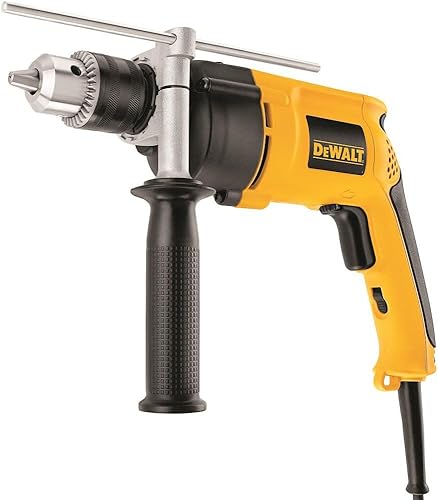 |  |  |  |  |  |  |  |
|---|---|---|---|---|---|---|---|---|---|---|
| Product | DEWALT DWD210G | Makita DP4020 | DEWALT DW511 | SKIL HD182001 | BLACK+DECKER DR560 | CRAFTSMAN CMED731 | Makita DS4012 | Bosch 1191VSRK | SKIL DL181901 | DEWALT DWD112 |
| Brand | DEWALT | Makita | DEWALT | Skil | BLACK+DECKER | CRAFTSMAN | Makita | Bosch | Skil | DEWALT |
| Best for | Best Overall | Runner-Up | Best for Masonry | Best Hammer Drill | Best for Home Projects | — | Best for Mixing | — | — | — |
| The listing says | 10-amp motor for drilling performance DEWALT-built motor with overload protection | 5.5 AMP motor Variable speed 0-3,000 RPM | 7.8 Amp motor with overload protection Variable speed for precise hole placement | 7.5 Amp motor 2-in-1 drilling and hammer drilling | 1/2 in. steel and 1-1/2 in. wood capacity Compact design for cramped spaces | Max 2,500 RPM variable speed trigger Keyless chuck for fast bit changes | 8.5 AMP motor with variable speed Variable speed 0 – 600 RPM | Lightweight for small diameter drilling 7 amp motor | 7.5 Amp motor 1/2 in. 13mm heavy-duty keyed chuck | 8-amp motor for heavy-duty applications 3/8-inch all-metal ratcheting keyless chuck |
| More information | Check Latest Price on Amazon | Check Latest Price on Amazon | Check Latest Price on Amazon | Check Latest Price on Amazon | Check Latest Price on Amazon | Check Latest Price on Amazon | Check Latest Price on Amazon | Check Latest Price on Amazon | Check Latest Price on Amazon | Check Latest Price on Amazon |
1. DEWALT Electric Drill
Best for: Professionals needing consistent, heavy-duty performance.
The 10-amp motor is designed to generate significant power, helping you drill through tough materials without stalling. Its metal-gear housing adds a layer of durability that helps the tool survive the daily grind of a busy jobsite. The two-finger trigger and soft-grip handle make it easier to maintain control when you’re working for long periods.
The variable speed switch allows you to adjust the RPM from 0 to 1250, giving you the versatility to handle different bits and materials. This drill is likely too much machine for a casual user who only needs to hang a few pictures at home.
Pros
- Powerful 10-amp motor for performance.
- Durable metal-gear housing for reliability.
- Locking side handle for extra control.
Cons
- Higher weight than smaller models.
2. Makita DP4020 1/2″ Drill
Best for: Users who value high-speed drilling precision.
This model features an in-line handle design that helps you keep the drill steady for more accurate hole placement. With a 5.5-amp motor and a speed range up to 3,000 RPM, it’s built to handle a wide variety of materials. The all-ball bearing construction is a highlight, as it’s designed to extend the life of the tool.
Weighing only 3.7 lbs., this drill is a good choice if you find heavier tools cause fatigue during long tasks. If you’re drilling into softer woods or metals, the variable speed trigger allows you to match the RPM to the material density. This prevents bit walking and ensures cleaner entry holes.
It isn’t designed for heavy-duty masonry work, so you should look elsewhere if you need a hammer drill function. Avoid using this tool for large-diameter hole saws in dense steel, as the 5.5-amp motor will stall under extreme torque. If you need to lock the drill on for repetitive, long-duration tasks, use the large recessed lock-on button near the trigger to reduce finger strain.
Pros
- Lightweight design reduces operator fatigue.
- All-ball bearing construction for durability.
- High RPM for versatile drilling.
Cons
- Lower amperage than heavy-duty models.
- Lacks hammer action for masonry.
3. DEWALT Hammer Drill
Best for: Masonry and concrete drilling tasks.
The 7.8-amp motor provides the necessary power to tackle masonry, steel, and wood projects. Its dual-mode feature is the standout, allowing you to switch between standard drilling and hammer drilling with ease. The inclusion of a depth rod helps you keep your holes consistent, which is useful for repetitive installation tasks.
At 4.3 lbs., the design is light enough to keep you working longer without feeling the weight. This is a specialized tool, so it might be more than you need if you never intend to drill into stone or brick.
Switch to hammer mode only when you hit concrete or masonry. Failing to toggle this setting correctly often leads to damaged bits or ruined work surfaces.
The 360° side handle allows you to adjust your grip based on the angle of the wall. Always lock the depth rod before starting to ensure every hole matches your fastener length exactly.
Pros
- Dual-mode hammer and drill settings.
- Includes depth rod for accuracy.
- Lightweight for extended use.
Cons
- Specialized for masonry projects.
4. SKIL 7.5-Amp 1/2-Inch Corded Hammer Drill
Best for: Demanding home renovation projects.
This hammer drill features a 7.5-amp motor that delivers the torque needed for tougher drilling jobs. The 2-in-1 function lets you switch between drilling and hammer drilling, making it a flexible addition to your tool kit. The 1/2-inch keyed chuck is built to hold large diameter bits securely while you work.
The lock-on button is a useful feature for extended drilling sessions where you need to keep the tool running. The listing doesn’t mention the specific impact force requirements for masonry. For wood or metal, switch back to standard drilling to prevent damaging the material.
This drill is quite powerful, so it may be overkill for light-duty or delicate tasks. If the material is soft, stick to the standard mode to maintain precision.
Pros
- Strong 7.5-amp motor for torque.
- Easy switch for hammer drilling.
- Keyed chuck for bit security.
- Side assist handle for accuracy.
Cons
- Keyed chuck requires a tool.
- Heavy-duty design feels bulky for small tasks.
5. BLACK+DECKER 7.0 Amp 1/2 in. Electric Drill/Driver Kit (DR560)
Best for: General home repair and maintenance.
This drill features a compact, streamlined design that allows you to maneuver easily in cramped spaces or awkward areas where larger tools fail. Its 7-amp motor provides reliable power for drilling holes and driving large fasteners through wood, metal, and plastic. You can customize the output up to 900 rpm, which gives you the precision needed for varied materials.
If you’re working with steel, keep the bit capacity at 1/2 inch; for wood, the tool handles up to 1-1/2 inches. Use the 360-degree side handle whenever you need extra stability, especially during high-torque tasks. The all-metal keyed chuck ensures your bits stay secure, while the reversing brush system maintains full power in both forward and reverse settings.
Avoid using this tool for industrial-grade projects, as it’s optimized for household maintenance rather than heavy construction. If you feel the motor straining during a task, reduce your pressure to prevent overheating. The comfort-grip handle is designed to reduce fatigue during extended use, making it a practical choice for long-term home projects.
Pros
- Compact size for tight spaces.
- All-metal chuck for durability.
- Comfortable grip for long use.
Cons
- Limited to light-duty projects.
6. CRAFTSMAN 3/8-in Electric Drill/Driver (7 Amp) (CMED731)
The keyless chuck is the primary advantage here, allowing you to swap bits instantly without searching for a misplaced chuck key. It reaches up to 2,500 RPM, providing ample speed for general drilling and driving fasteners. Use the lock-on trigger to maintain consistent power during long, repetitive tasks, which prevents hand fatigue.
This is a 3/8-inch drill, meaning it can’t accept the larger shank bits that 1/2-inch models handle. If your project involves drilling large holes into thick timber or mixing heavy compounds, this tool will likely stall. Reserve this model for standard household repairs, light assembly, or pilot hole drilling.
If you’re mounting this tool in a shop, it’s compatible with the Versa-track wall organization system. Note that the necessary hook and accessories for this storage system are sold separately.
Pros
- Keyless chuck for fast swaps.
- High speed for efficient drilling.
- Lock-on trigger for comfort.
- Versa-track system compatibility.
Cons
- Limited to smaller bits.
- Not intended for heavy-duty construction.
- Storage hooks sold separately.
7. Makita DS4012 Spade Handle Drill
Best for: Mixing mortar or thick paint.
With a powerful 8.5-amp motor and a low-speed range of 0 to 600 RPM, this drill is built for torque-heavy tasks like mixing. The D-handle rotates 360 degrees and has 24 detent stops, allowing you to position it perfectly for your grip. It’s well-balanced at 6.2 lbs., which helps prevent fatigue when you’re holding it for long periods.
Use this tool when you need to maintain high torque through viscous materials. If you’re drilling into standard wood or metal, the low 600 RPM ceiling will be a hindrance. You should choose a standard high-speed drill for those lighter applications. Using this spade handle for small tasks often leads to stripped bits or damaged fasteners because the motor provides too much force for delicate work.
The forward and reverse lever allows for quick adjustments during operation. If you find the drill pulling against your wrist, rotate the D-handle to a new detent position to improve your leverage.
Pros
- High torque for heavy mixing.
- Rotatable D-handle for control.
- Balanced weight for comfort.
Cons
- Low speed limits standard drilling.
8. Bosch 1191VSRK 120-Volt 1/2-Inch Single-Speed Hammer Drill
Best for: Precise, small-diameter drilling.
This drill is designed with a high performance-to-weight ratio, making it an excellent choice for work that requires a steady hand. The 7-amp motor balances power with a lightweight frame, reducing fatigue during overhead or repetitive tasks. The built-in quick-release depth gauge helps you maintain accuracy when drilling multiple holes to the same depth.
It converts easily from rotation-only to hammer mode for masonry work. Use rotation-only for wood or metal, and switch to hammer mode when you encounter concrete or brick. If you feel the tool struggling to advance, stop immediately; the aggressive impact mechanism is calibrated for smaller holes, and forcing it into large-diameter masonry will only burn out the motor.
Its compact design is great for tight spaces, but it might not be the best choice if you need to drive very large fasteners. You should confirm your bit size requirements before choosing this model.
Pros
- Compact and lightweight design.
- Built-in quick-release depth gauge.
- 360-degree auxiliary handle for control.
- Easy mode conversion for masonry.
Cons
- Optimized for small diameter work.
- Not intended for heavy-duty, large-diameter drilling.
9. SKIL DL181901 7.5 Amp 1/2″ Corded Drill
The built-in horizontal bubble level is a simple but helpful feature that ensures your holes stay straight. Use this tool when your project requires precise horizontal or vertical alignment, as the level provides an immediate visual check before you pull the trigger.
With a 7.5-amp motor and a 1/2-inch keyed chuck, it’s capable of handling demanding projects around the house. The keyed chuck is essential for securing large diameter bits, but you must keep track of the key to change them. If you lose the key, you can’t swap bits, so keep it tethered to the power cord.
The 2-finger variable speed trigger provides a comfortable way to control the drill’s pace. Use a light touch for starting holes to prevent bit walking, then apply full pressure for high-torque applications. The side assist handle is vital for these heavy-duty jobs, as it provides the leverage needed to maintain safety and accuracy. This is a solid, straightforward tool for those who want to avoid complicated features while tackling significant home repairs.
10. DEWALT DWD112 8A 3/8″ VSR Pistol-Grip Drill
Best for: Fastening and drilling in tight spots.
This pistol-grip drill uses an 8-amp motor to deliver strong performance in heavy-duty applications. The 3/8-inch all-metal, ratcheting, keyless chuck makes bit changes fast and holds them securely. With speeds up to 2,500 RPM, it’s versatile enough for both drilling and driving screws.
If you’re working with delicate materials, use the variable speed trigger to ease into the start of the hole. This prevents the bit from walking across the surface. For repetitive fastening, keep the speed lower to avoid stripping screw heads or damaging the material.
The all-ball bearing construction is designed to keep the tool running smoothly for a long time. Because this model is designed for smaller bits, it isn’t suitable for tasks that require larger bits or heavy-duty masonry bits. If your project demands heavy-duty bits with wide shanks, this tool won’t accommodate them.
Pros
- Keyless chuck for convenience.
- High speed for versatile use.
- Durable ball bearing construction.
Cons
- Limited to 3/8-inch bits.
How to Choose the Best Wired Drill in Sixty Seconds
Which chuck type should I choose?
The choice between a keyed and keyless chuck comes down to your preference for convenience versus holding power. A keyed chuck, such as the one on the SKIL DL181901 or the DEWALT DW511, requires a physical tool to tighten or loosen the bit. This provides a superior, firm grip that’s essential for heavy-duty work where bit slippage is a risk.
A keyless chuck, like the one on the CRAFTSMAN CMED731, allows for fast, tool-free bit changes. This is the better choice if you frequently swap between different drill bits and driver bits during a single project. However, mistake-prone users often assume all keyless systems hold equally; check for all-metal construction, like the ratcheting version on the DEWALT DWD112, to ensure you get the bit retention required for tougher tasks.
Do I really need a hammer drill?
You only need a hammer drill if you plan to drill into masonry, such as brick, concrete, or stone. A hammer drill adds a percussive, pounding action that chips away at the material while the bit rotates, making the job significantly faster.
If your home projects are limited to wood, metal, and plastic, a standard electric drill will be more than sufficient. Most hammer drills, such as the Bosch 1191VSRK or the SKIL HD182001, allow you to turn off the hammer mode. Use this dual-mode feature to convert from rotation-only to hammer-drill settings as your material changes. If you’re drilling exclusively into wood or thin metal, stick to a standard drill to avoid the unnecessary weight of the hammer mechanism.
How much power is enough?
The amperage of the motor is a reliable indicator of the drill’s capability. For light household tasks, such as assembling furniture or drilling small holes in wood, a 5.5-amp to 7-amp motor is usually plenty. If you’re working on demanding renovation projects, driving large lag bolts, or drilling into steel, you should look for a motor in the 7.5-amp to 10-amp range.
Remember that higher amperage often comes with increased weight. Consider how long you’ll be holding the tool overhead or in awkward positions. A heavier, more powerful drill like the 10-amp DEWALT DWD210G is built for high-performance structural work, while a lighter model, such as the 3.7-lb Makita DP4020, will significantly reduce operator fatigue during long, simple tasks. Always balance the motor size against the physical strain of the specific job at hand.
Frequently Asked Questions
What does the chuck size actually mean for my bits?
The chuck size determines the maximum diameter of the drill bit shank the tool accepts. A 1/2-inch chuck is standard for heavy-duty tasks like boring large holes, while smaller chucks are reserved for light drilling. Ensure your drill’s capacity matches your existing bit collection before purchasing.
Does owning a corded drill require extra maintenance?
Maintaining a corded drill is simple because you never need to worry about battery degradation. Keep the exterior clean and the air vents free of dust to prevent the motor from overheating. Periodically inspect the power cord for fraying to ensure safe operation.
What usually goes wrong first on these drills?
Chuck jaws can lose their grip over time, and internal carbon brushes will eventually wear down from regular use. Many professional-grade models feature replaceable brushes to significantly extend the tool’s lifespan. Avoid excessive force to prevent premature wear on these critical internal components.
Is the simplest drill on the list enough?
A simple model like the BLACK+DECKER DR560 is sufficient for most common household tasks like hanging shelves or assembling furniture. These tools handle basic repairs effectively without the added complexity of professional-grade gearboxes. Ensure your specific projects do not require masonry drilling before choosing a basic model.
Closing
For most users, the DEWALT DWD210G stands out as the best overall choice due to its balance of high power and durable construction. If you need a more compact option that still delivers reliable performance for home projects, the BLACK+DECKER DR560 is a dependable alternative that handles a variety of materials with ease. To make your final decision, check the material of the surfaces you intend to drill most often and choose a model with the corresponding chuck size and motor strength. Once you have identified your primary project type, you can use the links provided in this article to visit the product pages and confirm the current availability of your chosen tool.